
Atkins, South East Water and Geodesea
Award for Technical Excellence
About Category
About This Category
This award recognises a hi-tech advancement or concept that has helped a company improve its performance or delivery of a specific challenging element of a project, between January 2022 and January 2023. This category is not aimed at projects that have achieved overall excellence – such projects should be entered into one of the six project categories.
The entrant may have achieved technical excellence through producing a new approach to analysis or design, advanced techniques or procedures during design or delivery and/or working with its customers to improve delivery of a specific part of a project through technical refinement.
An entry should be for a single technical advance or development applied to a specific part of a project. Developments applied to a number of projects may be better placed in the Digital Innovation or Equipment Innovation categories.
The geotechnical work on the project presented must be completed at the time of the submission.
About This Entry
Entry Title
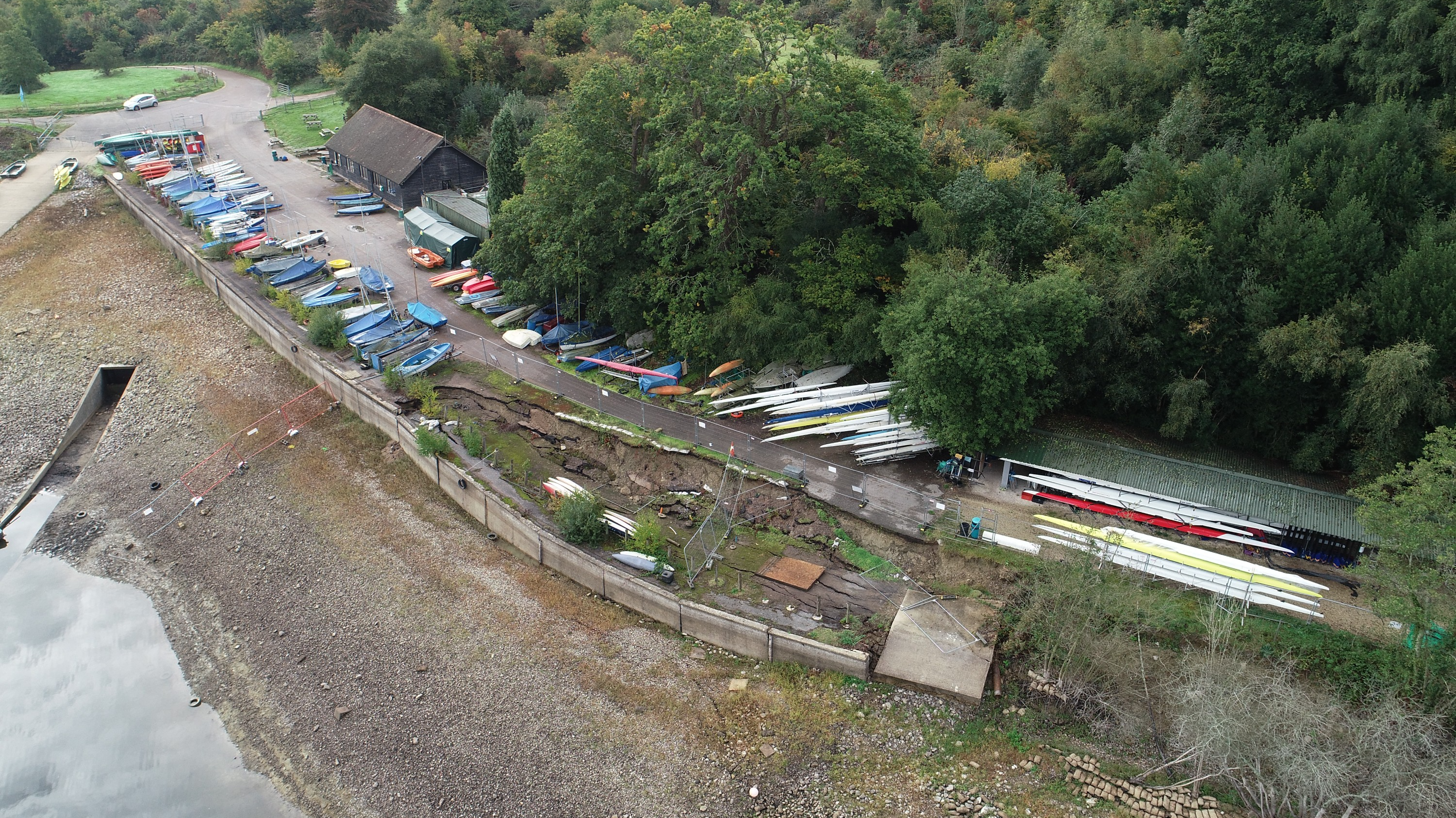
Ardingly Reservoir Boat Park Landslide and the use of bathymetry and airborne photogrammetry surveys
Entry Description
The use of Unmanned Aerial Vehicles to help map and monitor landslides is a relatively new practice. However, when part of a landslide is beneath the water then the use of Unmanned Surface Vehicles are used to help map the landslide features that are submerged. For the Ardingly Reservoir Boat Park Landslide, Atkins used a combination of these methods to help accurately map the landslide extents, understand its mechanisms and quantify rates of movement. The surveys allowed coverage of inaccessible areas due to the risk of further instability and the area submerged beneath the water, removing risk to staff and improving safety.
They also provided a cheap and quick solution, compared to traditional terrestrial surveys; reducing costs and increasing efficiency. The data produced, including 3D Surface Models and Digital Surface Vertical Change Models, have also been vital in providing information that will feed into future concept and detailed design stages.